

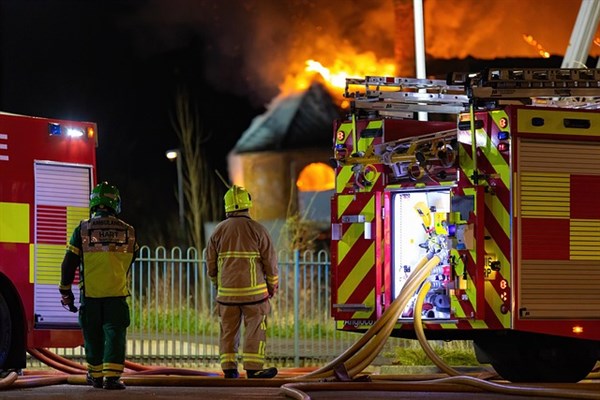
When wildfires ravage thousands of hectares during the summer, the media spotlight naturally turns to firefighters, water bombers, and farmers using their tractors to create firebreaks. Yet, in the shadow of these battles against the uncontrollable element, another sector plays a crucial role despite the financial losses incurred: road transport. Even as highway closures and emergency detours paralyze their operations and generate significant additional costs, many road transport professionals choose to put their equipment and expertise at the service of the community.
In the Var department, a region regularly struck by wildfires of unprecedented intensity, solidarity was organized in record time thanks to the impetus of employers' associations like OTRE PACA. Working closely with the prefectural services and the departmental fire and rescue operations centers, logistics were adapted. Large-capacity tanker semi-trailers, each capable of carrying up to 30,000 liters of water, were transported as close as possible to the fires. This mobile reserve of 150 cubic meters of water creates vital supply buffers for the forest fire tankers. For firefighters, the time saved is enormous: instead of making long trips to distant water sources or low-flow fire hydrants, they can refill their vehicles directly on the front lines and resume fighting the fire without interruption.
The contribution of the road transport sector goes far beyond simply supplying water. During the emergency evacuations necessitated by the rapid advance of the flames, saving livestock and farm animals presents a colossal and particularly perilous logistical challenge. Companies specializing in the transport of live animals have thus dispatched their trucks to the heart of the threatened areas. Operating in dense smoke, amidst extreme heat, and sometimes at the expense of their own safety, these drivers manage to evacuate hundreds of head of livestock trapped on farms before the blaze razes everything in its path.
This spontaneous support reflects an often-overlooked reality: the transport network constitutes an essential strategic logistical reserve in the event of a major crisis. Just as construction companies mobilize their bulldozers to create access roads through the scrubland, truckers demonstrate that the continuity of the relief effort relies on comprehensive coordination among local stakeholders. By transforming their work tools into instruments of rescue, these professionals demonstrate a responsiveness without which managing natural disasters would be far more complex.