

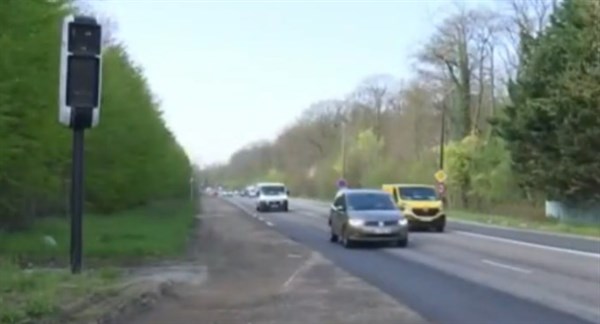
For several years, motorists had grown accustomed to no longer seeing the infamous flash of speed cameras. Since 2019, with the arrival of the Mesta Fusion 2 turret-style speed cameras, infrared technology has replaced the visible flash, making the images completely undetectable to the naked eye. This development, which began in 2013 with unmarked speed camera vehicles, aimed to strengthen deterrence by creating a feeling of constant surveillance. The result: millions of violations recorded without drivers even noticing, until they received the ticket in the mail.
But this repressive approach is reaching a turning point. The Department of Automated Control (DCA), attached to the Ministry of the Interior, is preparing a major change: the reintroduction of a visual signal to notify traffic violations in real time. In other words, the visible flash will make its grand return to French roads as early as 2026. This measure concerns not only the future urban speed cameras that mayors will be able to install under the 3DS law, but also the 1,552 tower-mounted speed cameras already in service, discriminating speed cameras, and existing fixed housings. Ultimately, this system could equip thousands of additional devices.
Why this change of heart? Officially, it's about restoring an educational dimension to the penalty. Authorities believe that immediately informing drivers of their infraction promotes awareness and prevention, rather than the surprise of receiving a ticket several days later. This approach also responds to a social demand: according to surveys, a majority of motorists want to be warned right away. The visible flash, however, will not be the same as that of older speed cameras: it must be sufficiently noticeable to signal the infraction without dazzling other drivers or causing sudden braking. To avoid any discomfort, it will be triggered after the infrared image has been captured.
This return is part of a massive modernization of the radar network. By 2030, France plans to install 5,000 additional urban speed cameras, on top of existing devices. These new devices will be far more sophisticated: enhanced with artificial intelligence and equipped with high-definition cameras, they will be able to detect up to 15 offenses simultaneously, from running red lights and using a mobile phone while driving to not wearing a seatbelt or failing to maintain a safe following distance. The Mesta Fusion 2 tower-mounted speed cameras, already capable of monitoring eight lanes and tracking more than 100 vehicles at the same time, will remain central to this system.
For the government, the challenge is twofold: to improve road safety and maintain substantial revenue. In 2026, fines issued by speed cameras are expected to bring in nearly €693 million, an increase compared to previous years. This financial windfall fuels debates about the true purpose of this equipment: is it an educational tool or a ticketing machine? In any case, the trend is clear: French roads are entering an era of more visible, but also more intrusive, enforcement, with technologies capable of analyzing driver behavior in real time.
In short, the "what you don't see, you don't get caught for" approach is over. From 2026, the flashing light will once again become a strong signal on our roads, symbolizing a strategy that combines prevention, transparency, and increased surveillance. It remains to be seen whether this change will ease tensions between motorists and public authorities... or whether it will reinforce the feeling of pervasive control.